Choose a scale, not a greatest-hits list
Cairo’s collections are too extensive for complete coverage in one visit. Select palm, hand, body, room or monumental scale and compare how two institutions interpret it. One stable question produces better notes than a rushed inventory. Confirm opening, admission, access, photography and object availability directly with each institution near the visit date.
Use Tahrir for cabinet density
The Egyptian Museum’s historic galleries support comparisons among many related objects and display traditions. Start with one case and record dimensions, spacing, label structure and whether the group is archaeological or typological. Density can reveal variation while reducing individual context. The building and case system belong to modern museum history and should not be mistaken for ancient arrangement.
Use NMEC for body and long chronology
The National Museum of Egyptian Civilization can connect clothing, tools, coffins and representations of the body across time. Follow one scale through changing materials and social settings. Similar human dimensions do not guarantee continuity of meaning. Record where the institutional narrative changes period, region or function rather than flattening the route into one timeless Egyptian body.
Use GEM for architectural framing
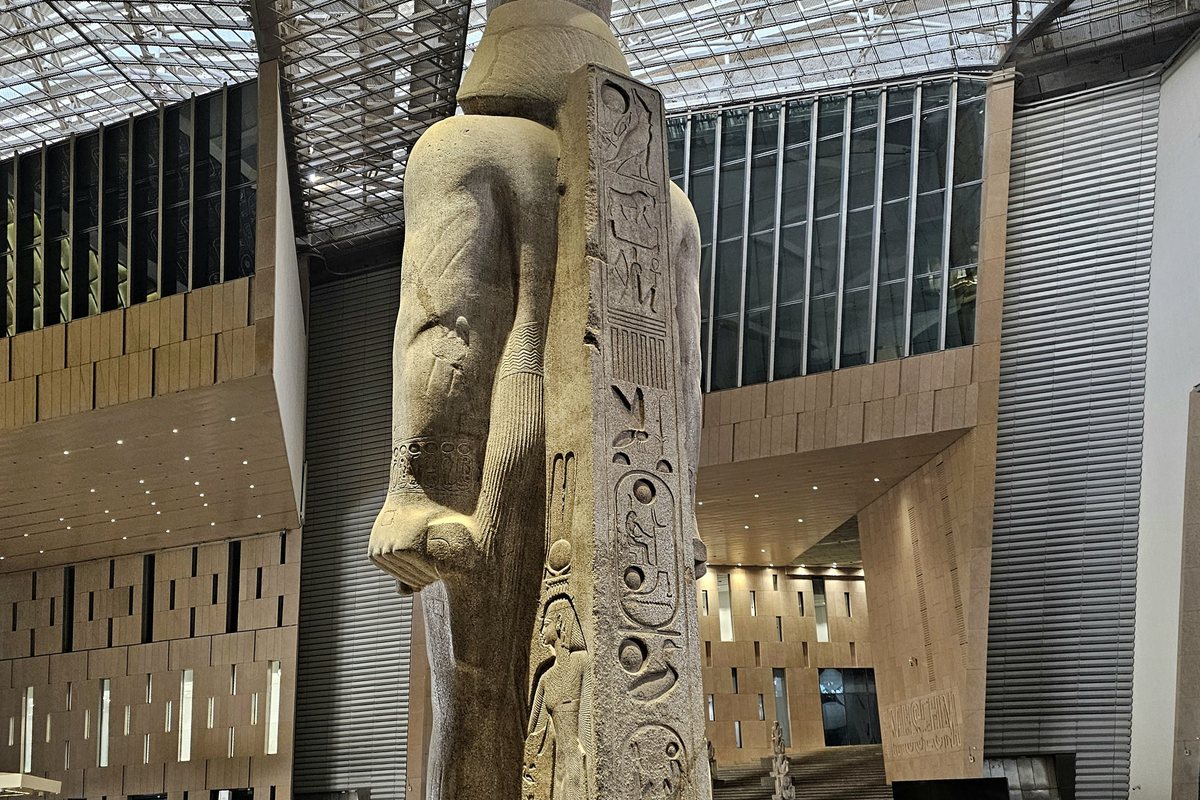
The Grand Egyptian Museum’s large volumes and circulation make monumental viewing distance especially visible. Compare approach, stair level, silhouette and surface detail on one large object. Current gallery access and displays can change, so use the official visitor source. The modern building’s axis is an interpretation and engineering achievement, not the original ancient setting.
Keep specialised museums central
The Coptic Museum and Museum of Islamic Art offer body-, hand- and room-scale evidence across textile, wood, stone, metal, glass and manuscript traditions. Do not use them as brief appendices to a pharaonic itinerary. Apply the same dimensions and distance notes while allowing their own chronologies, religious settings and architectural contexts to define the comparison.
Finish with a five-line scale record
For two objects, write institution, inventory number, published dimensions, present viewing distance and one original spatial relationship. Add the visit date and one uncertainty. This small record remains useful when galleries change and gives later research a precise starting point. If the second museum becomes impractical, complete the comparison within one institution rather than sacrificing attention.
Let dimensions choose the route
After selecting a scale, identify one primary institution and one optional comparison. If travel, queues or fatigue remove the second stop, compare two galleries within the first museum. A complete scale record needs attention more than mileage. Keep official links available, but do not build the day around an object whose current display has not been confirmed by the responsible institution.
Use published dimensions and current institutional instructions. Never cross a barrier or handle an object to improve a measurement.