Choose a stable comparison
Proportion describes relationships among parts or between object and setting. State the reference: head to body, figure to register, door to wall, statue to base. Avoid comparing objects from different functions and dates as if one universal anatomy governed them. A deliberate visual hierarchy can enlarge one figure without claiming that every represented body literally had those dimensions.
Correct for viewpoint
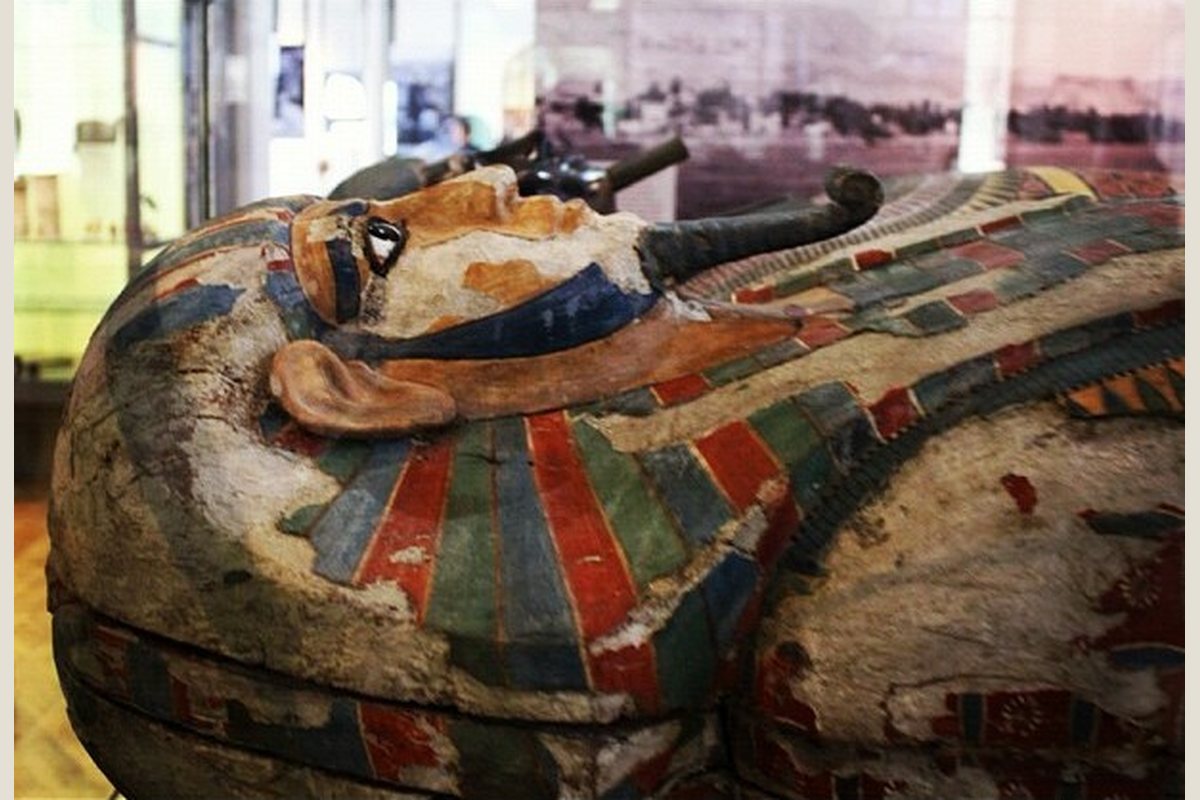
Objects made for elevation or distance may adjust depth and size to read from below. Museum display can place them near eye level. Record the present angle, then use architectural evidence to reconstruct the intended one. What looks compressed in a frontal photograph may resolve from the planned station. Perspective is part of material design, not an inconvenience to remove.
Separate damage from design
Missing feet, bases, crowns and borders alter perceived ratio. Modern mounts can add visual height or isolate a fragment. Use surviving joins, early records and comparable objects before calculating a complete form. A precise ratio built from uncertain reconstruction is not more reliable than a qualified description. Show which dimensions are measured, published or estimated.
Use grids carefully
A transparent grid over an institutional image can clarify alignment, repeated modules and changes in register. It can also impose order if the photograph is angled or the object curved. Identify the image source and correct distortion only with documented methods. A grid is an analytical tool, not proof that an ancient maker used the exact same planning system.
Compare like with like
Select objects with shared type, function, date range or original setting, then explain why comparison is justified. Differences may follow material, damage, workshop, intended distance or cultural choice. Replace ‘more realistic’ with a precise observation about length, angle, volume or relation. This vocabulary explains change without turning one canon into a timeless measure of quality.
Make a ratio note
Choose two dimensions that are visible or published, write the raw values and state why their relationship matters. Add viewing angle and missing parts. Do not calculate beyond the precision of the source. The short note should reveal a design question, not generate an impressive number. If the comparison does not change interpretation, leave it out.
State what the ratio cannot tell you
A ratio does not identify a maker, date, meaning or standard by itself. Add the material, object type, original setting and source of both dimensions. If one value comes from reconstruction, mark it. This short limit statement prevents numerical neatness from outrunning archaeological evidence and makes comparison easier to revise when catalogues or technical studies update the form.
Use published dimensions and current institutional instructions. Never cross a barrier or handle an object to improve a measurement.