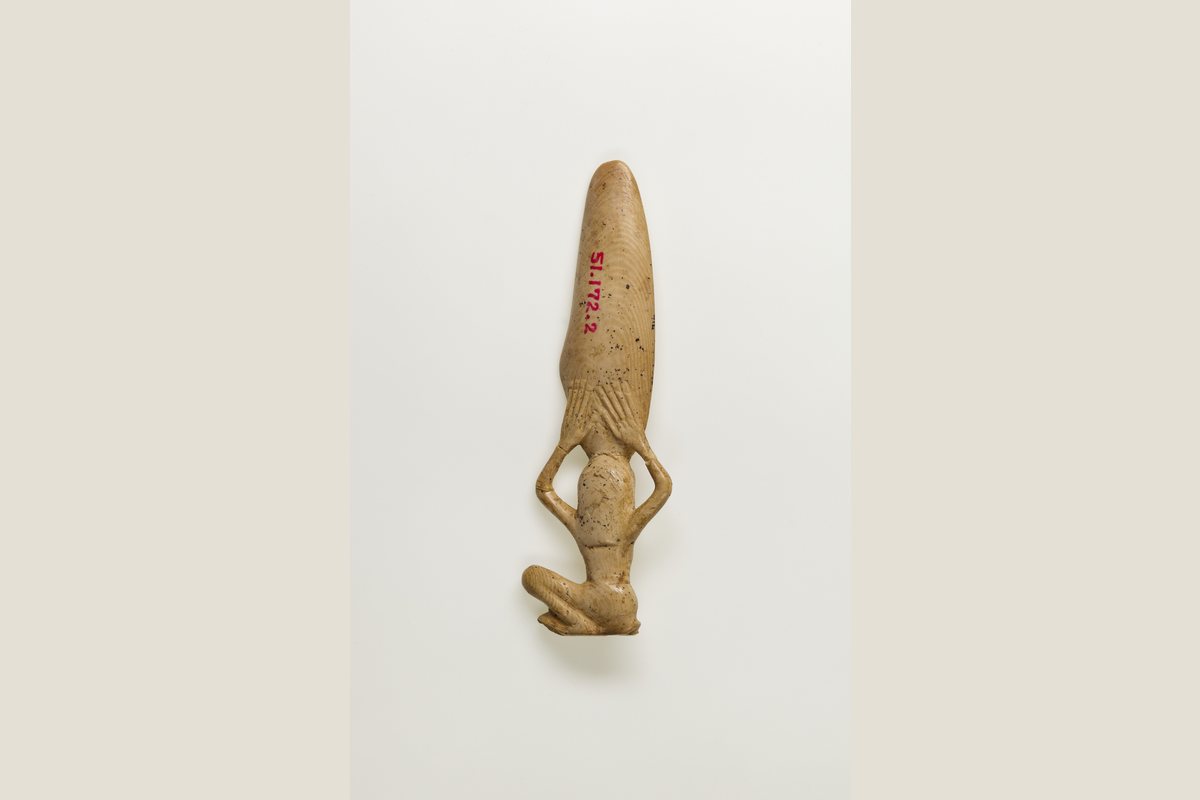
0–8 minutes: establish the record
Copy museum, gallery, title, inventory number, material, date, provenance and published dimensions. Preserve qualifiers exactly. Note your visit date and whether dimensions include a mount. This header separates museum information from your observation and lets you locate an updated collection record later without relying on a photograph or remembered object name.
8–18 minutes: stay at long distance
From the normal approach, record silhouette, axis, relation to neighbouring objects, light and gallery route. Estimate distance only as approximate unless the museum provides a plan. Do not zoom. Ask what the display makes visible first and whether current height or orientation likely differs from the documented original setting.
18–32 minutes: work at middle distance
Move closer within permitted circulation. Record proportion, joins, edges, openings, mount and how form relates to a body or room. Compare published dimensions with your visual impression. Note blocked sides and reflections. This station connects overall presence to construction without letting either the isolated object image or the dramatic gallery view dominate.
32–43 minutes: inspect the surface
At the closest allowed point, describe grain, fibre, pigment, glaze, tool marks, wear, corrosion, repair and loss as relevant. Name causes only when institutional or technical evidence supports them. No touching, flash, leaning over barriers or obstructing other visitors. A small detail should be marked on the whole-object sketch so its position survives.
43–51 minutes: restore the original scale
Use the label, plan or trusted source to ask where the object belonged, who could approach, which direction it faced and what surrounded it. Separate documented position from reconstruction. Add the movement into the museum as another spatial phase. Leave the field blank when provenance or original setting is uncertain rather than creating a plausible scene.
51–60 minutes: write the scale paragraph
Use four sentences: long-distance relation, middle-distance construction, close surface evidence, and original spatial context. Add published dimensions and one uncertainty. Photograph the label only where permitted. After the visit, verify through the inventory number and add research in a separate colour so the original field observation remains visible rather than silently rewritten.
After the visit: verify in layers
Keep field observation, museum label and later research in separate columns. Search by institution and inventory number, then add dimensions or context without silently rewriting the original note. If a published value conflicts with your estimate, retain both and explain the correction. This audit trail shows how access and evidence changed the account and makes future updates much easier.
Use published dimensions and current institutional instructions. Never cross a barrier or handle an object to improve a measurement.