Use three stations
Begin at the gallery’s normal approach, pause at a middle distance, then move as close as barriers allow without blocking others. At each station, list what becomes legible: silhouette, relation to neighbours, inscription, tool mark or pigment trace. Do not photograph first. The sequence records how the object directs attention and prevents close detail from erasing spatial context.
Record the barrier
Cases, rails, mounts and low light protect objects while establishing minimum distance and available angles. Include them in the observation. A blocked reverse is not an invitation to infer it. Use catalogue photography later. Access limitations are part of the present museum encounter and can explain why public interpretation emphasizes some features over others.
Distinguish ancient and current distance
A temple relief moved into a gallery, a coffin raised vertically or a statue lowered to eye level acquires a new viewing geometry. Reconstruct original placement through plans, architecture and labels. Do not assume your current close view was available or meaningful in the same way. Museums can deliberately reveal craft that an ancient setting kept remote.
Let scale set note length
At long distance, record axis, outline and relation. At middle distance, record form, joins and composition. Close up, record surface and condition. Do not force every category at every station. This disciplined division makes notes easier to compare and shows which claims depend on privileged museum access, digital enlargement or later technical publication.
Use photography as one station
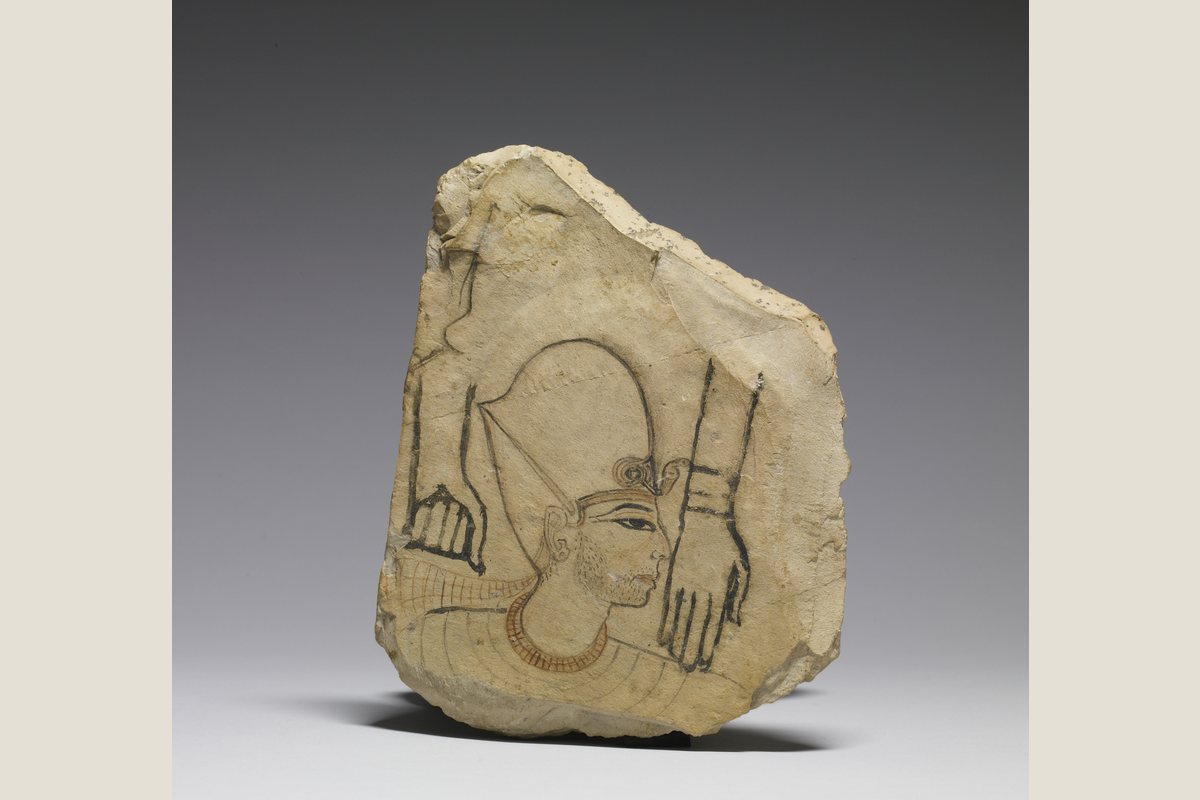
A wide image records gallery relation; a medium image records object form; a permitted close-up records surface. Keep all three and preserve image metadata. Avoid extreme digital zoom that substitutes pixels for evidence. Institution-supplied images may offer better detail under controlled light, but their isolated background changes the spatial question. Cite them separately.
Write the distance sentence
Complete: ‘From across the room I saw…, at the case I saw…, and the museum image revealed…’. Add one feature that remained inaccessible. The sentence makes viewing conditions explicit and prevents different modes of access from blending into a false all-seeing account. It also works as a compact comparison across museums with different case design and circulation.
Compare attention, not museum quality
A dense historic gallery, a low-light textile display and an open atrium create different distances for different collections and care needs. Do not rank them by how close a camera can get. Compare what each arrangement protects, relates and makes legible. The strongest display for surface detail may be weaker for archaeological grouping, and the reverse can also be true.
Use published dimensions and current institutional instructions. Never cross a barrier or handle an object to improve a measurement.