Use published mass when it exists
Visual size does not reliably predict weight. Hollow casting, dense stone, wood, composite construction and missing interiors change the calculation. Copy institutional mass and units; do not invent a tonnage from photographs. When mass is absent, record material and dimensions, then keep weight qualitative. An honest unknown is better than false precision.
Look for ancient load paths
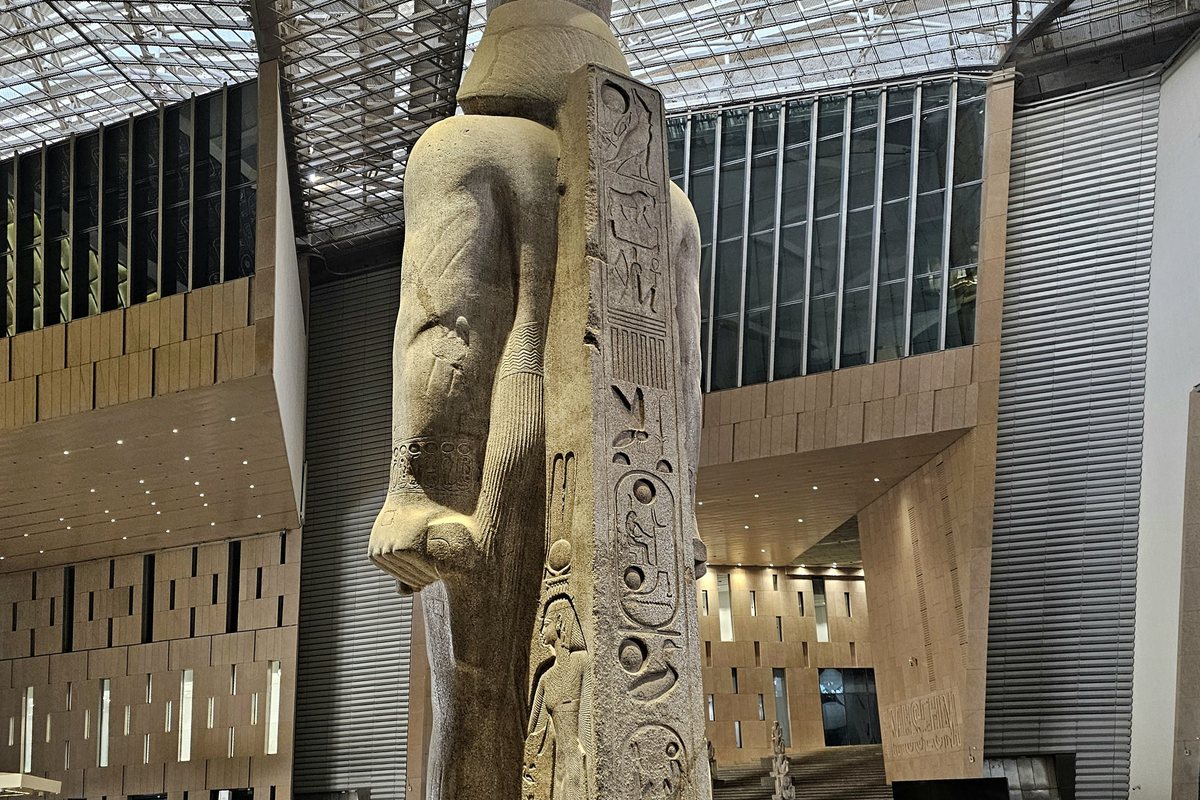
Bases, feet, tenons, back pillars, wall beds and thickened zones transfer weight. Map where the object meets its support and whether force is centred or distributed. Ancient damage or reuse can interrupt that system. A modern plinth may conceal the underside, so use technical diagrams before reconstructing attachment. Support is part of design, not merely a neutral platform.
Include people and equipment
Lifting and carrying can involve teams, ropes, sledges, levers, boats, scaffolds and prepared routes. Avoid assigning an exact method because it sounds plausible. Texts, images, tool finds, tracks and experimental archaeology contribute different evidence. Large-scale work was organized labour with supply, skill and risk, not a single spectacular moment.
Read the museum floor
A heavy object requires structural assessment, rigging, vibration control and a stable mount. These modern systems may be partly hidden. Installation photographs and conservation reports can reveal them. The gallery location is therefore an engineering decision as well as a curatorial one. Do not climb mounts or cross barriers to inspect supports; their invisibility often protects both visitor and object.
Connect weight to movement history
An object can travel from quarry to workshop, original setting, secondary use, excavation store, conservation laboratory and gallery. Each transfer uses different infrastructure and documentation. Map only supported stages. Modern relocation is not less historical than ancient transport, and it can explain repairs, joins, orientation and why a fragment appears in a particular institution.
Draw a support chain
Start with the visible object and move downward: original attachment where known, current mount, plinth, floor and building. Use solid lines for observed or documented support and dashed lines for hidden or reconstructed parts. Add one handling question. This chain turns static mass into a sequence of design and care without pretending that the object is available for physical testing.
Do not test stability visually
A tilted mount, narrow base or visible join can look precarious without being unsafe; concealed armatures and structural calculations may carry the load. Visitors should record the support neutrally and alert staff only to an immediate observed incident, not diagnose engineering from appearance. Published installation and conservation information is the appropriate source for explaining how a heavy object is secured.
Use published dimensions and current institutional instructions. Never cross a barrier or handle an object to improve a measurement.